“Why wo uld anyone want to be an umpire?” I hear this question a lot in my roles as both a sport and performance consultant and as an umpire. When someone asks that, what they are really saying is: why do you want to put yourself in the line of fire? What possible motivation do you have to be yelled at, questioned, berated, belittled, scrutinized, evaluated, rated, and basically run through the wringer on a game-to-game basis? There are as many reasons as there are people who choose to be on the other side of the whistle, behind home plate, or in the big chair court-side. For many it is a passion for the game, an aptitude for applying the rules, a desire to give back to their sport, a motivator for ongoing physical fitness, and the thrill of the challenge. Each official has their own reasons and many of us will gladly talk about why we love it. But the question stems from the same source as the sign reminding spectators that umpires and coaches are humans. Being a sports official at any level can be a challenge. I’ll touch on a few of those challenges and then propose a few ways SPP consultants may be able to help officials cope with them.
Umpires and referees are athletes in their own right. Think about it. While the physical demands are different in each sport, in sports like soccer, field hockey, lacrosse, and ice hockey, officials are expected to physically keep up with the play, make hundreds of decisions a minute, know and
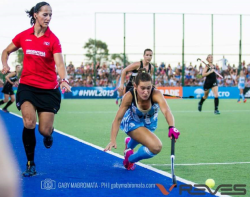
FIH umpire Michelle Joubert- Hockey World League 2015
appropriately apply the rules, be present mentally and emotionally, block out tons of stimulus from fans, coaches, the weather, and sometimes their own minds. At the same time as gating out information, they can’t close out too much lest they miss something important.
No one plays a perfect game, no one coaches a perfect game, and no one umpires a perfect game. Otherwise, why would we play the game at all? Pressures upon officials to be perfect can be immense. In the era of video, instant replay, super slow-mo, and social media, no flaw goes unexamined, no call goes unquestioned, and no official can make a mistake without hearing about it later. From pee-wee softball to world cup soccer, armchair officiating can create massive pressure both in the moment and on the longevity of officials.
So let’s examine two elements from a sport and performance psychology perspective.
Focus. If it’s too broad, you can lose track of what is important. Some people describe this as losing concentration but I tend to look at it as drinking from the firehose. It’s not that your concentration goes away in this case, it’s that your brain hits its cognitive load and you don’t know how to shift back to what is important. If your focus is too narrow, it’s easy to get caught up in the play, miss crucial information or move your body in anticipation of what it coming next. You’ve put blinders on your brain and frozen yourself.
From an SPP perspective, there are many tools to help with focus and attention. I like to describe three states of focus- squirrel brain, sloth brain, and zombie brain. The first two should be fairly straightforward. When your attention is all over the place, you become like a squirrel trying to cross the road. Sloth brain is just the opposite; you get super delayed in thinking and reacting because your focus has gotten too tight. Zombie brain is how I describe the ideal state. In SPP we talk about being where you need to be when you need to be there as a goal. When you’re experiencing zombie brain, you aren’t over- or under- processing, you’re taking in just the right amount of information. Keys here are to recognize when you are sliding away from zombie brain, regroup your thoughts and your body, and refocus appropriately. When you’re in zombie brain, you aren’t struggling to process anything, it all just flows in and out like breathing. Working with an SPP consultant can help you train to recognize (early), regroup (quickly), and refocus (effectively) your attention.
What do you do when you make a mistake? It would be ridiculous to train mentally and emotionally as if you never make a mistake. You only have one pair of eyes and milliseconds to process information and make the

Manchester United players politely expressing disagreement with Andy D’Urso
correct call. You may have the benefit of a partner, officiating team, or video review, but more often than not, the call is yours and you have to make it. Each sport has its own mechanisms for correcting a call but what SPP concerns itself with is what happens internally when you make a mistake. Small errors are good training ground here. As the game moves on from your goof, how do you allow yourself to move on? Do you find yourself dwelling or are you able to let go and move on? This may be a good moment to take a quick look at my previous post about mindful meditation. Recovering from mistakes is a skill that you can cultivate in your mindful practice. When you are away from the game, you can begin reinforcing the idea that you can’t go back and change the past and stressing about it now only impacts your performance negatively. With mindfulness, you can work on remaining in the present moment, accepting what has passed and letting go of the stress it may have produced.
Next On the Horizion, we’ll be looking at getting and giving feedback, and executing under pressure.

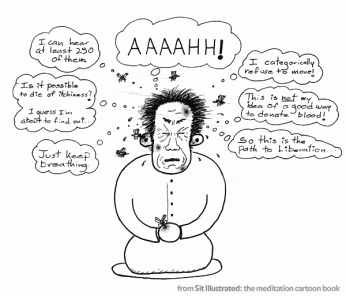 before and you didn’t think it was for you, I have a question. Did you try it once and think it was lame or too hard? Did you have an image of sitting in a full lotus position with birds perched on your shoulder and did you get frustrated when all you could think about was how much your nose itched and how the sweat was working its way toward your butt? You are NOT alone! Were you confused, bored, or distracted? That is TOTALLY NORMAL.
 Let's Count to Potato